
How to Buy Four Rims That Fit Your Car Correctly
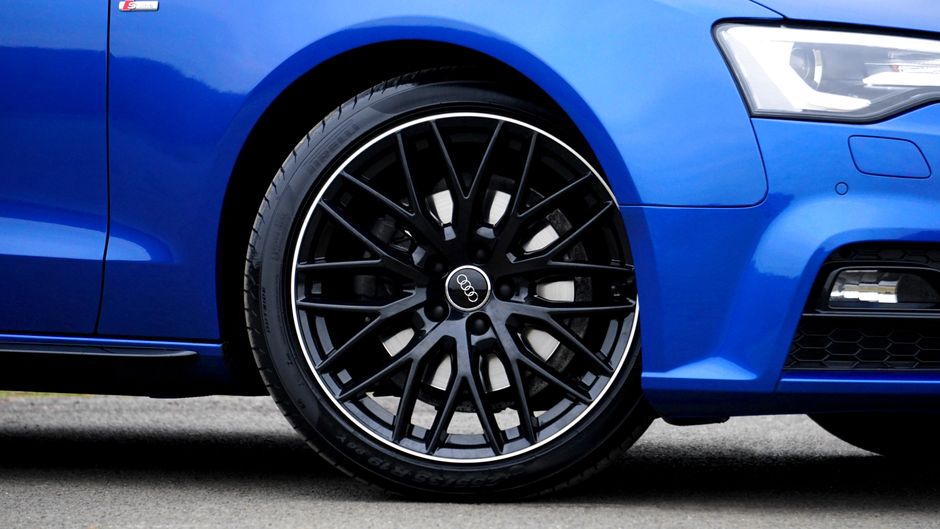
To buy a complete set of four rims safely, match the vehicle's specified tire size and wheel dimensions, bolt pattern, offset, center bore, and load requirement before placing an order. Then verify tire-to-rim compatibility, test-fit each wheel for brake and suspension clearance, and confirm that any hub-centric rings fit flush. A matching bolt pattern alone does not establish fitment.
How do I know whether a set of four rims will fit my car?
A set of four rims fits only when every relevant measurement and rating works together: tire-compatible diameter and width, correct bolt pattern, suitable offset, compatible center bore, brake clearance, and adequate wheel load rating. This is not a matter of visual similarity. It is a dimensional and load-bearing system.
Begin with the vehicle's own records. 49 CFR 571.110 states that the required vehicle placard includes the original tire size and is generally permanently affixed to the driver's-side B-pillar or door area; the placard may also include load range, load index, and speed rating. Michelin likewise identifies the owner's manual and driver's-door tire information sticker as the places to verify the correct tire size.
Next, inspect the proposed wheel's stamped or published specifications. Rim size designation means diameter and width under the federal definition: diameter is the nominal diameter of the bead seat, while width is the nominal distance between rim flanges. Record those figures alongside bolt pattern, offset, center bore, and manufacturer-rated maximum load. If the wheel's load rating is unavailable, the NHTSA/SEMA Wheel & Tire Council guide says it should not be used on the vehicle.
Load is the first filter, not a final detail. The guide states that the required wheel rating can be calculated by dividing the vehicle's heaviest Gross Axle Weight Rating by two, with GAWR commonly shown on the vehicle identification label. Its rule is blunt: the manufacturer-determined wheel load rating must never be exceeded.
| Option | Who it suits | Cost | Key limitation |
|---|---|---|---|
| Same-diameter replacement rims with manufacturer-recommended tire size | Buyers seeking the vehicle's specified tire fitment | Not published | Wheel load rating, bolt pattern, offset, center bore, and clearance still require verification |
| Plus-one wheel and tire sizing | Buyers changing wheel and tire rim diameter by 1 inch | Not published | Michelin says tire aspect ratio must decrease to keep overall tire diameter unchanged |
| Wider tire on the same rim diameter | Buyers whose tire manufacturer lists compatible rim dimensions | Not published | Tire manufacturer approval and vehicle clearance remain necessary |
| Aftermarket wheel with hub-centric rings | Buyers whose wheel center bore requires a correctly fitting ring | Not published | The ring must fit snugly and must not protrude beyond the wheel mounting surface |
What do wheel width, diameter, offset, and center bore mean?
Wheel width and diameter describe the rim section that must accept the tire; offset and center bore describe how that rim sits on the vehicle. The distinction matters because a wheel can accept the tire yet still fail to clear the vehicle.
Diameter is the nominal bead-seat diameter, not simply the wheel's outside edge. Width is the nominal distance between rim flanges. A marking that combines these values communicates rim size designation, but it does not settle the rest of the fitment question.
Offset or backspacing governs the wheel's position relative to the mounting surface. SEMA's Wheel & Tire Council includes tire size, bolt pattern, offset or backspacing, brake-caliper protrusion beyond the mounting-surface plane, and gross vehicle weight in its measurement database. That collection is the useful model: wheel fitment is a set of related constraints, not a single number.
Center bore is the opening at the wheel's center that meets the vehicle hub. Where a ring is used to center an aftermarket wheel, its dimensions must serve both sides of that connection. The wheel must also seat flush at the mounting surface; neither an attractive finish nor a correct diameter compensates for a wheel that does not sit correctly.
Can I use rims with the same bolt pattern but a different offset?
Yes only after clearance is confirmed; the same bolt pattern does not prove that a different offset will work. Bolt pattern establishes where the fasteners align, while offset changes the wheel's position and can alter the relationship to brake calipers, suspension components, and fenders.
The evidence is direct rather than theoretical. SEMA records brake-caliper protrusion alongside bolt pattern and offset or rear spacing in its fitment data. The SEMA Wheel & Tire Council therefore treats brake geometry as a separate requirement from fastener geometry.
Before tires are mounted, the NHTSA/SEMA guide calls for test-fitting the wheel at every position. It must sit flush and avoid brake calipers, suspension components, balancing weights, rivets, and other obstructions. After that initial test, check tire-to-fender and tire-to-suspension clearance through complete left-to-right steering travel with the vehicle raised and at normal vehicle weight. This procedure resolves the question that an online specification table cannot.
Changing diameter or width introduces a second system-level issue: tire behavior. Michelin describes a plus-one change as increasing wheel and tire rim diameter by 1 inch, with a lower tire aspect ratio needed to keep overall tire diameter unchanged. Michelin also warns that changes in tire or wheel diameter can affect gearing, traction control, stability control, braking, and speedometer readings.
Do I need hub-centric rings for aftermarket wheels?
You need hub-centric rings when the aftermarket wheel's center bore requires a ring to fit snugly over the vehicle hub and within the wheel bore. The ring is not an improvised spacer. Its job is centering, and its dimensions must be correct at both interfaces.
The NHTSA/SEMA guide gives a precise standard: hub-centering rings must fit snugly on the vehicle hub and wheel center bore, sit flush or slightly below the wheel mounting surface, and not protrude beyond that surface. A ring that protrudes prevents the wheel from seating correctly; a ring that is loose does not meet the stated fit requirement.
Do not allow the ring question to obscure the larger sequence. First establish the wheel's load rating. Then match tire-compatible rim dimensions and confirm bolt pattern, offset, and center bore. Finally, test-fit each position and inspect clearances. This ordering prevents a common purchasing error: solving one visible measurement while leaving a less visible safety constraint unanswered.
Tire compatibility belongs in the same sequence. Under 49 CFR 571.139, tire manufacturers must make public a listing of rims that may be used with every tire they produce, including rim dimensional specifications and a rim diagram. Use that listing for the exact tire size, rather than treating a similar-looking tire as evidence of compatibility. Michelin further advises never choosing a tire smaller than, or with less load-carrying capacity than, the original tire.
The purchase decision is therefore simple in principle, if not always in paperwork: buy only after the vehicle placard, wheel specification, tire manufacturer's approved-rim listing, load calculation, and physical clearance check agree. Anything less is an incomplete fitment claim.
Frequently Asked Questions
Can I move my existing tires to larger or wider rims?
Only if the tire manufacturer lists the new rim dimensions as approved for that tire size. Federal tire requirements require manufacturers to publish the rims that may be used with each tire they produce. If wheel diameter changes, Michelin states that the tire aspect ratio must decrease to preserve overall tire diameter; check manufacturer-approved alternate sizes before changing dimensions.
How can I tell if a wheel will rub the brakes, suspension, or fender?
Test-fit the wheel at every position before mounting tires, then confirm that it sits flush and clears calipers, suspension parts, balancing weights, rivets, and other obstructions. The NHTSA/SEMA guide also calls for checking tire-to-fender and tire-to-suspension clearance through full left-to-right steering travel with the vehicle raised and at normal vehicle weight.
Should I buy a complete wheel set or replace only one damaged rim?
For a vehicle that uses four tires of the same fitment, Michelin advises against mixing tire sizes and says all four tires should be the same size. The supplied sources do not publish a general rule requiring four matching rims, but a complete set makes it simpler to keep the rim dimensions and tire fitment consistent. If replacing one rim, verify that its diameter, width, bolt pattern, offset, center bore, and load rating match the required specification.