
How Do I Choose Vinyl Records That Reveal My Turntable's Strengths?
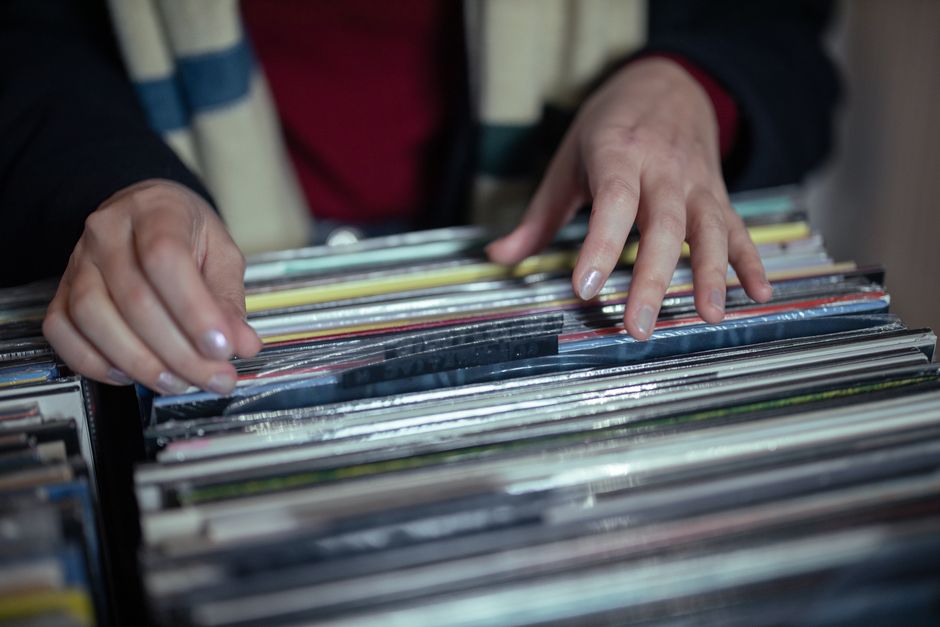
Choose familiar records with clear vocals, sustained notes, deep bass, quiet passages, and dense arrangements across several genres, then compare specific pressings rather than chasing reputation or price. Start with a modest, clean copy and a test record if possible. Listen for stable pitch, focused imaging, controlled bass, natural dynamics, and intrusive surface noise. The best starter record is one you know well enough to notice what changes.
Vinyl is no longer a niche scavenger hunt. The Recording Industry Association of America reports that U.S. vinyl LP/EP revenue reached $1.4429 billion in 2024, with 43.6 million units shipped. That growth creates choice. It also creates noise: budget editions, deluxe reissues, and plenty of records selected for hype rather than useful listening.
What records should I use to test a new turntable?
Use a small, familiar set that gives each part of the turntable a specific job: one record for pitch, one for bass, one for vocals and imaging, and one for quiet passages. One impressive album cannot tell you everything. A repeatable set can.
| Genre | What it can reveal | What to listen for |
|---|---|---|
| Rock | Drive and dense mixes | Does the loud chorus stay separated, or turn into a flat wall? |
| Jazz | Imaging and dynamics | Can you follow individual instruments as the arrangement changes? |
| Hip-hop | Bass control and vocal focus | Does the low end stay defined while the vocal remains easy to follow? |
| Classical | Pitch stability and scale | Do sustained piano notes or strings sound steady rather than unsettled? |
| Electronic | Low-frequency control and transient detail | Do bass pulses start and stop cleanly without masking nearby sounds? |
For a structured baseline, a test record is more useful than guessing. Ortofon's test record includes channel sweeps and 1 kHz reference tones intended to check left/right connections, channel balance, and turntable speed. Its tracking tests increase signal amplitude from 50 to 100 micrometers; sputtering or a break from a pure tone is a signal to investigate tracking force, cartridge setup, or worn components.
Run the same short passages after each adjustment. This is the same-track rule: do not swap the record, the volume, and the setup all at once. That creates three variables and no answer. Keep the comparison simple: “On this passage, is the vocal centered? Is the bass still distinct? Is the sustained note steady?”
Which vinyl albums have the best sound quality?
The best-sounding vinyl album is the specific pressing that serves your listening goal, not automatically the most celebrated title or the most expensive reissue. Recording, mastering, lacquer cutting, and pressing all shape the final result, according to a Recording Academy discussion with vinyl manufacturing and mastering professionals.
Start with music you know. A familiar rock record reveals whether guitars collapse during a loud section. A familiar jazz record reveals whether instruments occupy stable positions. A familiar hip-hop or electronic record reveals whether low frequencies remain controlled. The album does not need a luxury edition to do this job; it needs a clean playing surface and moments you can recall confidently.
Classical music earns a place in the set because pitch errors are hard to hide. Stereophile notes that playing an LP at the wrong speed produces incorrect pitches, and its measurements demonstrate how a test tone can expose speed accuracy. Sustained piano, strings, or other stable-pitch material makes this issue easier to hear than a constantly changing arrangement.
For a deliberate bass check, Stereophile used Richard Strauss's Also Sprach Zarathustra, performed by Fritz Reiner and the Chicago Symphony Orchestra, because the recording layers double basses, bass drum, timpani, and organ pedal. The point is not that every collection needs this exact record. The point is to include one track where low-frequency layers must remain separate. If they smear together, the problem is visible to your ears.
Budget first is a sound strategy, not a compromise. Build a reference set with ordinary editions you can play without anxiety, then audition premium versions against that baseline. Also apply the same cost discipline used when comparing larger purchases: look past the convenient headline number and examine what you are actually getting. A premium label is a promise to investigate, not proof of a better result.
What should I listen for when comparing vinyl pressings?
Listen for pitch, stereo placement, bass separation, vocal clarity, dynamics, and surface noise in the same passages at the same volume. Make the comparison about audible outcomes, not packaging, scarcity, or online consensus.
- Check pitch first. Use a sustained piano note, string line, or synth tone. The question is direct: “Does the note hold steady?” The Library of Congress says a good ear, a pitch generator, and a variable-speed turntable are essential for proper playback of historical discs, which underscores how central correct speed is to credible playback.
- Check the center image. Play a section with a prominent vocal or solo instrument. Ask: “Does it stay firmly located, or wander and blur?” Ortofon's channel and balance checks help separate a setup problem from a pressing comparison.
- Check bass boundaries. Choose a passage with kick drum, bass guitar, electronic bass, or orchestra low end. Better control is not merely more bass. It is being able to identify separate musical lines.
- Check quiet spaces. Listen before the music starts, between tracks, and under a fade. Stereophile describes a lower noise floor as making decays and individual phrases easier to distinguish. Persistent ticks, roar, or crackle are information; note where they occur.
- Check dynamics without mistaking music for damage. A sharp percussion hit or textured ambience is not automatically a defect. Restoration engineer Jessica Thompson explains that aggressive de-clicking can remove musical transients along with unwanted noise. Ask a better question: “Is this sound repeatable at the same groove location, and does it interrupt the music?”
One physical clue helps explain why editions can differ. The Recording Academy panel says roughly 20 to 22 minutes per LP side is the practical limit without reducing volume level. That does not let you rank a pressing from a track list alone. It gives you a useful prompt: compare the loudest and quietest passages before deciding that a longer side or a premium edition is automatically the better buy.
Finish with a one-minute note after each comparison: “Pressing A: vocal more centered; Pressing B: quieter lead-in; no clear bass winner.” That is enough. You are building a record of what you heard, not trying to win an argument.
Frequently Asked Questions
Are there good-sounding records for every music genre?
Yes. Every genre can expose a different part of a turntable setup: rock can test drive and congestion, jazz can test placement and dynamics, hip-hop and electronic music can test bass control, and classical music can test pitch stability and quiet backgrounds. The useful record is not the genre's most expensive title; it is a clean, familiar pressing with passages you can compare repeatedly.
Which albums make the best first vinyl purchases?
Buy albums you already know in more than one listening situation and that contain a mix of quiet, loud, simple, and busy passages. Richard Strauss's Also Sprach Zarathustra, in the Fritz Reiner/Chicago Symphony Orchestra recording cited by Stereophile, is a purposeful choice for testing bass control because of its layered low-frequency instruments. For other genres, choose a familiar record with a centered vocal, sustained notes, and a section where you expect the mix to open up.
Your homework: choose three records you already know, assign each one a single job, and write down one sentence after each listen. If the sentence names pitch, image, bass, noise, or dynamics, you are comparing records. If it only says “better,” run the passage again.
Sources
- Recording Industry Association of America: 2024 Year-End Revenue Report
- Ortofon Test Record
- Stereophile: Basis Audio Ovation Turntable
- Stereophile: Linn Sondek LP12 Measurements
- Library of Congress: Making the Jukebox
- Recording Academy: GRAMMY GPS on Vinyl Production
- Recording Academy: Jessica Thompson on Audio Restoration
Related guides

Where Can 18-to-20-Year-Olds Find Legitimate DTLA Dance Events?
A practical workflow for finding and verifying legitimate all-ages and 18+ Downtown LA dance events before buying tickets.