
How to Buy Used Golf Clubs Online at a Fair Total Cost
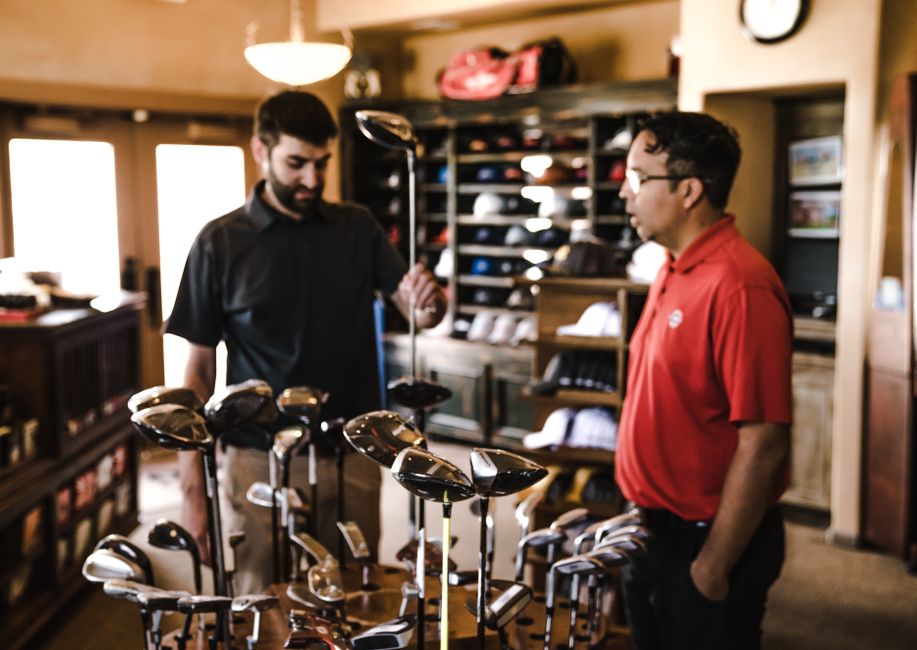
To buy used golf clubs online at a fair total cost, match the set’s shaft, length, and club makeup to the golfer, inspect condition photos closely, and compare retailer protections with private-sale terms. Add delivery, grip replacement, and any needed adjustments to the asking price before deciding; a low listing price is not the same as a ready-to-play bargain.
What should I check before buying used golf clubs online?
Before buying used golf clubs online, check the club condition, set composition, length, seller’s return terms, and delivered cost. The listing price answers only one part of the buying question: whether the equipment can suit the golfer and what it will take to put it into play.
Start with the wear categories in the 2nd Swing Golf Condition Guide: grips, shafts, faces, soles, and crowns or toplines. A grade is a summary, not a substitute for inspecting the specific clubs. 2nd Swing describes its condition scale as subjective and advises buyers to judge from the item's photos. It notes that grade 8 clubs may have grips nearing replacement, shaft markings, face wear, and cosmetic damage; grade 6 clubs may show considerable wear and worn or ineffective iron grooves.
“The best judge of all is the photos.” — 2nd Swing Golf, Golf Club Condition Guide
Then verify what the set actually contains. Count the clubs and record the types, brands, and models shown; a seller’s phrase such as “complete set” does not establish that it contains the clubs this golfer needs. Ask whether clubs have been cut down or extended. The USGA’s equipment rules specify an overall length of at least 18 inches and, except for putters, no more than 48 inches, but a model name alone does not establish standard length.
Finally, calculate the ready-to-play cost: purchase price, shipping, grip replacement, and any length or other adjustments identified as necessary. PGA TOUR Superstore lists standard ground shipping at $8.99 within the contiguous 48 states, and free standard ground shipping on eligible orders over $99, with exclusions including some oversized items and custom clubs. Its listed grip-installation labor starts at $2.99 per club, excluding the grip; ten clubs would therefore start at $29.90 in labor alone. The grip cost is additional, and the sources do not establish a universal price for club adjustments.
How do I know what shaft flex is right for me?
Use the golfer’s driver swing speed as a starting point for shaft flex, then check whether the club’s length and feel suit the golfer. Callaway Golf’s Driver Fitting Protocol gives a general driver-head-speed guide: X-stiff at 105+ mph, stiff at 95–105 mph, regular at 85–95 mph, light at 75–85 mph, and ladies below 75 mph.
These bands are a fitting starting point, not a guarantee that a used shaft will suit every player in the category. Callaway’s protocol also considers launch, spin, shot shape, and the golfer’s existing club. It explains that lighter shafts may help produce more head speed, while heavier shafts may support consistency and tighter dispersion. Do not treat flex as the only fit variable or assume the listed category makes an unfamiliar club a safe match.
Length deserves a separate check. Ask for the measured club length and whether it has been shortened or extended; the USGA explains how club length is measured and sets the general equipment range at 18 to 48 inches, except that putters are not subject to the 48-inch maximum. That rule is a boundary, not a personal fitting recommendation. If a listing omits length, ask rather than inferring it from the brand or model.
Set makeup also changes value. A golfer who already owns some clubs may not benefit from paying for a duplicate-heavy bundle, while a set with a missing club may require a later purchase. The provided sources do not prescribe an ideal club count or set composition for each ability level, so compare the actual contents against the golfer’s existing bag and needs instead of relying on a generic label.
What photos should I ask a seller to send?
Ask for clear, well-lit photos of every club’s grip, shaft, face, sole, and crown or topline, plus an image showing all clubs together. Those views correspond to the areas 2nd Swing assesses in its condition guide and let you evaluate specific wear rather than relying on a grade or a broad “good condition” description.
For irons, request close-ups of the faces and grooves so wear is visible; 2nd Swing notes that grade 6 clubs may have worn or ineffective grooves. For woods and drivers, request images of the crown and sole, and ask for close-ups of any marks or damage. Photographing shafts and grips helps reveal markings and worn surfaces that may create a near-term replacement cost.
Request a photo of any model or specification markings and a measurement of the club length. Ask the seller to state whether clubs have been cut down or extended. Photos cannot establish every detail of playability, but they can reveal missing information and give you a sound basis for follow-up questions.
Compare the return terms before purchasing. 2nd Swing’s online return policy allows returns of online used-club purchases within 60 days of delivery if the item is in the same or original condition. The buyer is responsible for return shipping; the retailer offers a prepaid label for $14.99, and outbound shipping costs are not refunded. The policy also specifies 20% restocking fees in certain cases, including a repeat return in the same category in a calendar year or returning an item in worse condition than sold. PGA TOUR Superstore describes a 30-day return period for new, unused goods and a 90-day performance guarantee for new stock clubs; check its specific pre-owned-club terms rather than assuming those protections apply.
Shipping is part of both cost and condition risk. FedEx recommends Ground for U.S. delivery in 1–5 business days and advises protecting club heads, wrapping clubs to prevent movement, and filling package voids. Ask how the set will be packed and which service is used; package dimensions and the number of clubs can affect the quote, and a retailer’s published shipping rate should not be assumed to apply to every seller or parcel.
How the buying options compare
| Option | Who it suits | Published cost or terms | Key limitation |
|---|---|---|---|
| 2nd Swing online used-club purchase | Buyers who want a condition guide and stated online used-club return terms | Returns within 60 days of delivery if the item remains in original condition; prepaid return label $14.99 | Buyer pays return shipping; shipping is not refunded; specified situations carry a 20% restocking fee |
| PGA TOUR Superstore shipping | Buyers whose order qualifies for a published contiguous-48-states service rate | Standard ground $8.99; free standard ground on eligible orders over $99 | Some oversized items and custom clubs are excluded; verify pre-owned-club return terms |
| Private seller | not published | not published | Return protections and shipping terms are not established by the available sources |
Frequently Asked Questions
How much should I budget for shipping and new grips?
Shipping depends on the seller, order, package, and delivery method. PGA TOUR Superstore lists contiguous-48-states standard ground shipping at $8.99, with free standard ground shipping on eligible orders over $99, subject to exclusions. Regripping labor starts at $2.99 per club at PGA TOUR Superstore, excluding the grip itself; ten clubs would therefore start at $29.90 in labor, before grip costs.
Is it safer to buy from a used-club retailer or a private seller?
A retailer may publish condition grades and return terms, giving you defined criteria and a process to review before purchase. For example, 2nd Swing allows online used-club returns within 60 days of delivery if the item remains in its original condition, but return shipping is the buyer’s responsibility and specified cases can incur a restocking fee. Private-sale protections are not covered by the sources here, so confirm the seller’s terms directly before paying.
The practical comparison is between the price you see and the cost and terms you can verify. A club set is a fair deal when its condition is documented, its fit is plausible, and shipping and likely repairs are included in the total—not when the headline price is merely low.
Sources
- 2nd Swing Golf — Golf Club Condition Guide
- 2nd Swing Golf — Online Return Policy
- PGA TOUR Superstore — Frequently Asked Questions
- PGA TOUR Superstore — Golf Club Regripping Service
- Callaway Golf — Driver Fitting Protocol
- United States Golf Association — Equipment Rules: Clubs
- FedEx — How to Ship Golf Clubs
Related guides

How to Choose a Local Buffet: Reviews, Freshness and Total Cost
Compare buffet reviews, food safety, menu fit and the full group price before you book.
How to Verify a Used Engine Before You Buy
Check fitment, donor mileage, engine condition, warranty terms, and installed costs before buying a used engine.

How Do I Finance a Used Car Without Letting the EMI Hide the Cost?
A practical guide to used-car EMI, down payments, loan terms, interest, debt, and the ownership costs that belong in your budget.

Why Do Live-Score Apps Show Different Football Updates?
Why football score apps disagree, why alerts can beat TV, and how to verify goals, cards, and VAR reversals.